Linux Has Made Me Fall in Love with Computers All over Again
Nostalgic beginnings
I've always been a massive computer nerd. It all began in the 90s when I used to go over to the neighbour's house and play on their MS-DOS computer. I have fond memories of playing Doom, Jazz Jackrabbit and Worms. Those were days of great fun, wonder, and mystery. I remember one day asking my mother how cartoons were made and she, very innocently, answered that they were done on computers. I promptly made a drawing of a cartoon character on a piece of paper and took it over to my neighbour's system to try and fit it in the floppy disk drive, thinking that the computer would instantly animate it.
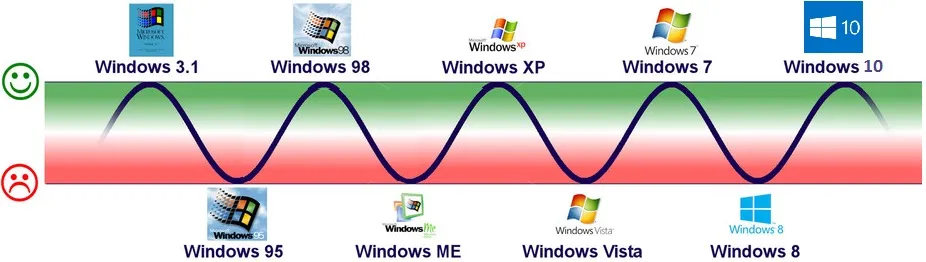
As I got older I finally had my own system, running Windows 95 and soon after, Windows 98. The rest is history. My love for computers has been undeniable, although it has fluctuated over the decades, partially due to the infamous "Windows cycle" of releasing a good OS version followed by a bad one.
I was one of the users who held out on Windows XP until Windows 7 came out, totally skipping Vista after seeing how badly it ran on my machine. I made the same move with Windows 8, going from 7 straight to 10. Despite this, I was still happy to use Windows. Until now.
The Microsoft Problem
Microsoft is not the company it used to be. It has transformed rapidly in the last few decades into more of an advertisement platform with an interconnected ecosystem used to mine user data. They own Windows, Xbox, their own search engine and web browser, and a leading enterprise solution in Office365. Microsoft is a tech behemoth, and they know how to exploit that fact.
With Windows 11, we have seen the biggest transformation in the operating system's history. It’s not about the UI or new revolutionary quality of life features, but about the intent and philosophy behind it. I cringe whenever I open the Start menu and see the amount of bloatware the system installs without my permission. The widgets section has turned into a sensationalist spam-filled news collection tailored with "your interests," and the Settings app constantly tries to convince you to purchase an Office365 or Xbox Gamepass subscription.
For the first time, I do not feel at ease with a Windows computer. It feels like Windows 11 is always trying to distract me and see where and what I click. Their in-house web browser, Microsoft Edge, defaults to opening their "spam fiesta" news site where catchy headlines plunge you into procrastination.
The computer just feels "too alive", so uncontrollable at times. You might think I exaggerate with these words, but you only have to see that you might be using your computer normally one day and the next you have a new unknown button out of nowhere (looking at you Copilot).
Luckily, I did not have to endure all of that for long. Very early in Windows 11's life, I decided not to use it because my keyboard was not working properly on it, making my work much more difficult. I reinstalled Windows 10, and the keyboard was back to its former self.
Still, I was through with the infamous Windows cycle. Microsoft announced that Windows 10 support would be dropped in 2025, basically forcing us to adopt Windows 11. If you stay on an unsupported OS, you will be subject to exploits and security vulnerabilities. Realizing this, I had no reason to stay on Windows 10, even with a few more years of updates.
The Age of the Penguin (Linux)
It was at this crossroads where I considered Linux (Mac never crossed my mind, sorry Apple fans!). I had little to no experience with Linux, only having dabbled a bit into Ubuntu 18.04 Bionic Beaver back in 2018 when I installed it to revive a very old laptop for a friend. This initial experience was a new journey for me because I was in front of a different OS, which worked completely different from what I was used to. I learned a little bit of terminal, how to use the software centre and work with documents which is all that was needed. I had fun discovering this new frontier, but sadly I gave the laptop back to my friend (who is not tech savvy at all, but just needed a browser, VLC player and a word processor). Overall, the whole experience left a great taste and memory but life moved on and I was happily living with Windows 10 on my machine.
Fast forward to 2022, the memory of this experience motivated me to research Linux distributions and see how feasible it would be to move my whole work flow over. Here began my obsessive consumption of anything related to Linux to learn as much as possible before the switch. Could I play most video games on Linux? Could I edit videos? Could I play VR? Could I use photo editing software? Could I use mods for games? These were some of the important questions that clouded my mind during the time and I made sure to extensively research every point. After a while, I considered Pop_OS!. I downloaded the ISO, flashed it to a USB drive and I began the installation.
Here I am now, in 2026, writing about Linux and my experiences with this marvellous OS– or rather, distributions using the Linux kernel.
I have since gone through various phases of my Linux journey. I have suffered from distro-hopping, constantly ricing my desktop, experimenting with GPU passthrough and virtual machines, trying to run anything under Wine, trying out weird and equally fantastic Github projects, fully installing Arch.... I've done so much, seen so much and been through so much hell (and fun) in my process of learning and adapting to Linux that I can now say, confidently, I am quite proficient in its use. I now feel as skilled at maintaining a Linux system as I was with Windows.
It was not an easy journey, though. There were so many things I had to adjust to or relearn but in hindsight it is more than understandable. When we think of typical OSs, Windows is usually the first one to come to mind and we often think that any OS will work in a similar way. You could see some screenshots of a Cinnamon desktop or KDE Plasma and tell yourself it doesn't look hard at all. Yes, dragging windows and opening files works pretty much the same anywhere but it is more about how the engine works under the hood. When errors come up, do you know why they happen? Maybe you have built up an intuition to fix these things on Windows but you need to rebuild a whole other set of intuitions for Linux. The good news is that after tinkering for a few months, this intuition comes naturally and managing your system just becomes as common as managing a Windows machine.
Rediscovering the Joy of Computing
Linux has revived my passion for computers in a way I had long lost and that it is what I'm most grateful for. When I was smaller, I used to tinker and touch all the options I could fiddle with in Windows XP (to the point I even broke the system sometimes) and that curiosity had been waning over the years with every release of Windows. But with Linux and this new wild frontier, I've had a new toy to play with and discover and it has even encouraged me to learn programming and scripting which I now find fascinating.
That is why if you love computers, you owe it to yourself to install Linux and learn it. It has even deepened my understanding of Windows and MacOS in ways I have not considered before so even if you are a staunch user of the corporate options, Linux is almost like a spiritual retreat where you come out more the wiser than before.
Compelling Reasons to Try Linux
- Freedom from corporate interference: The OS is completely yours to do whatever you wish with it.
- Use of free (as in freedom) and open source software: Trust, transparency, and community collaboration.
- Wide variety of distributions: You have a wide variety of different distributions with different objectives, philosophies and purposes that can suit the needs of different people. You are not locked in between only choosing one version of Windows or MacOS.
- No telemetry or spying: Your computer is your secret vault.
- Controlled updates: No new "features" are added unless you want them.
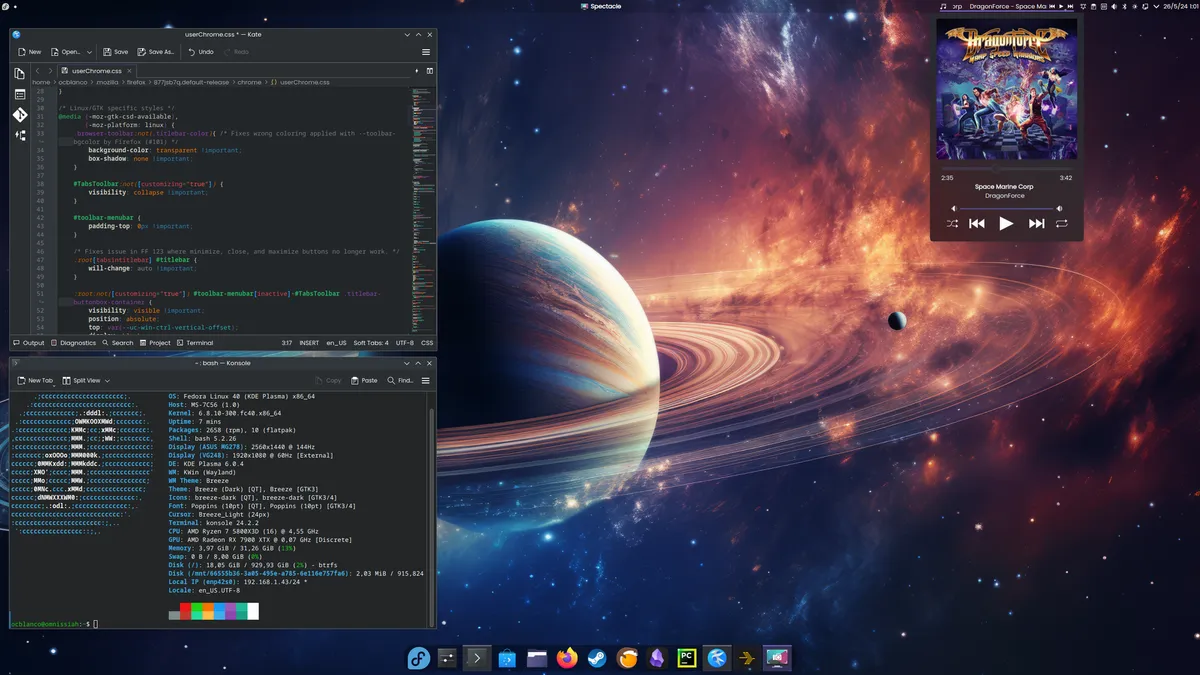
- Highly customizable environments: Make your computer truly yours and adapted to your workflow.
Conclusion
Now, I have mainly been singing the praises of Linux throughout this article but that doesn't mean that Linux is perfect. There are some disadvantages to running exclusively on Linux and for certain professional sectors Linux is not enough, and I'd like to write about it sometime.
But winding down now, I just want to say that discovering Linux has been a milestone in my computing life and one that has changed my views on computers profoundly. It has been a path that I do not regret taking and one where I don't think I will ever abandon.